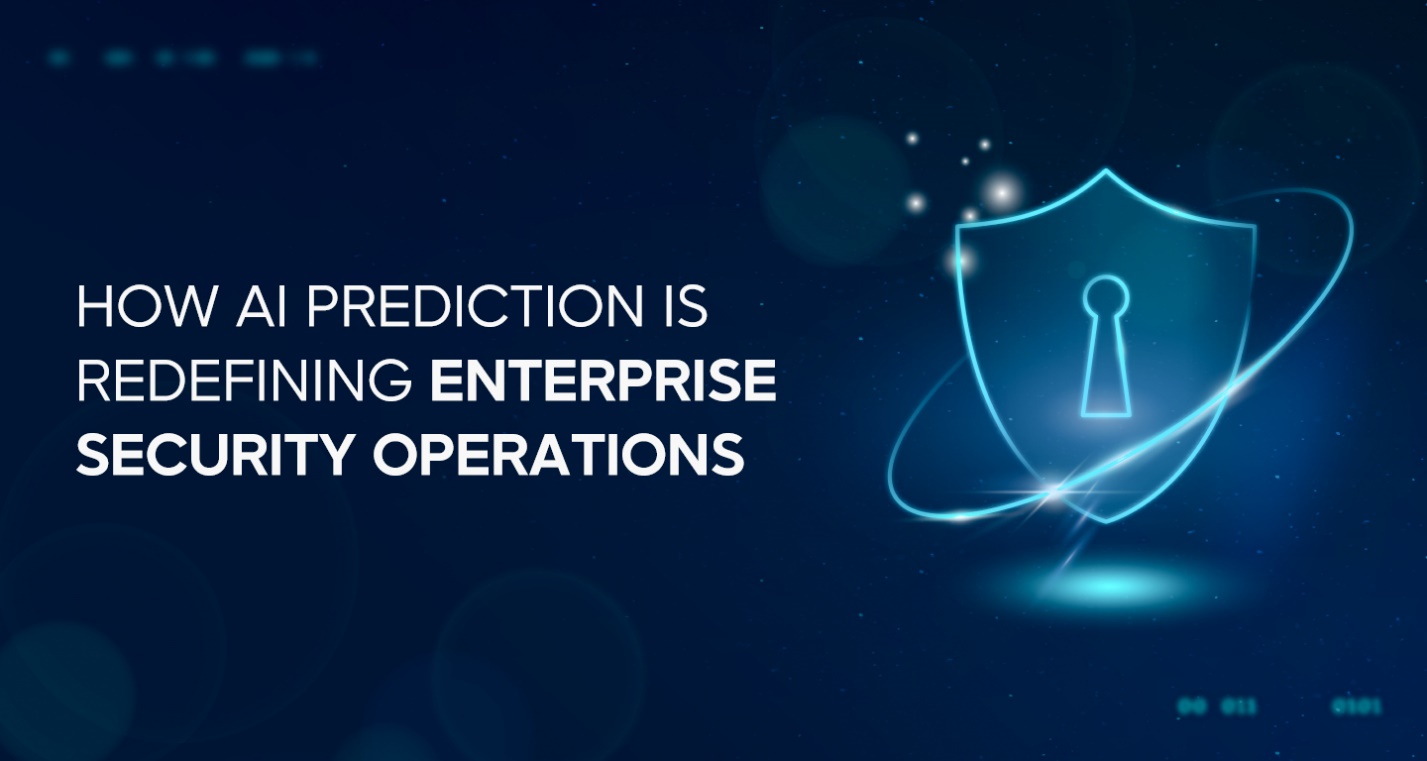
Enterprise security operations are being reshaped by AI prediction because organizations now rely on data-driven foresight to identify, prioritize and mitigate threats before damage occurs. Instead of reacting after an incident, modern security teams are moving toward proactive, intelligence-led defense models that align with how today’s attacks actually unfold.
What AI Prediction Means for Enterprise Security
AI prediction in enterprise security refers to the use of machine learning models and advanced analytics to anticipate cyber risks based on historical patterns, behavioral signals and real-time data. In practical terms, this means systems can flag abnormal activity, forecast likely attack paths and help security teams intervene earlier in the threat lifecycle.
This shift matters because enterprise environments generate massive volumes of logs, alerts and user activity data that human teams cannot analyze efficiently on their own. Predictive AI filters noise, highlights genuine risk and supports faster, more accurate decision-making without increasing operational fatigue.
Why Traditional Security Models Are No Longer Enough
Traditional security operations depend heavily on static rules, manual reviews and known threat signatures. While these methods still have value, they struggle against modern attack techniques that are adaptive, automated and often subtle.
AI-driven prediction addresses these gaps by learning continuously. It adapts as attackers change tactics and detects risks that do not match predefined rules. For enterprises managing hybrid infrastructures, cloud workloads and remote users, this adaptive capability has become a baseline requirement rather than an optional enhancement.
How Predictive AI Improves Threat Detection Accuracy
Predictive AI improves threat detection by correlating multiple signals across endpoints, networks, identities and applications. Instead of treating alerts in isolation, it evaluates context and intent.
For example, a single failed login attempt may be harmless, but when combined with unusual access times, abnormal data movement and deviations from a user’s historical behavior, predictive models can identify a high-risk scenario. This contextual awareness significantly reduces false positives and allows security teams to focus on incidents that truly matter.
The Operational Impact on Security Teams
AI prediction reshapes daily security operations by shifting teams from alert management to risk management. Analysts spend less time triaging repetitive notifications and more time investigating prioritized threats.
This operational change also supports better collaboration between security, IT and business units. Predictive insights provide a shared understanding of risk, enabling faster approvals, clearer communication and security strategies that align with business objectives rather than obstruct them.
Data-Driven Decision Making and Compliance Support
Predictive AI strengthens governance and compliance by providing measurable, auditable insights into security posture. Enterprises can demonstrate how risks are identified, evaluated and mitigated using consistent, data-backed processes.
This approach supports regulatory requirements that demand continuous monitoring and documented controls. AI-generated insights help organizations validate that security investments are effective and aligned with evolving compliance expectations.
Scaling Security Across Complex Enterprise Environments
Enterprises today operate across multiple clouds, SaaS platforms and global locations. AI prediction enables security operations to scale across this complexity without linear increases in cost or staffing.
By automating analysis and prioritization, predictive systems allow organizations to maintain consistent security standards even as infrastructure expands. This scalability is essential for enterprises pursuing digital transformation while maintaining strong risk governance.
Where AI-Powered Cybersecurity Fits In
AI-powered cybersecurity plays a critical role in turning predictive insights into actionable defense strategies. By integrating predictive analytics with automated response mechanisms, enterprises can contain threats faster and reduce potential impact. You can explore how this convergence works in practice through modern approaches to AI-powered cybersecurity. When implemented thoughtfully, this approach enhances resilience without sacrificing transparency or control for security leaders.
The Role of Artificial Intelligence Services in Enterprise Security
Artificial Intelligence services provide the foundation for designing, deploying and optimizing predictive security models. These services help enterprises align AI capabilities with their specific risk profiles, data environments and compliance needs. Well-implemented Artificial Intelligence services ensure that predictive security solutions remain accurate, explainable and aligned with long-term business goals rather than functioning as isolated tools.
Ending Words
AI prediction is not about replacing human expertise; it is about augmenting it with scalable intelligence. Enterprises that adopt predictive security operations gain clearer visibility into risk, faster response times and stronger alignment between security and business strategy.
For organizations exploring how predictive AI can strengthen their security operations, the next step is understanding how these capabilities fit into existing environments and objectives. To discuss tailored approaches or implementation considerations, you can Get in Touch with experts who specialize in enterprise-grade AI and security integration.